Thursday, 1 August 2013

freeze is a b-boying technique that involves halting all body motion, often in an interesting or balance-intensive position. It is implied that the position is hit and held from motion as if freezing in motion, or into ice. Freezes often incorporate various twists and distortions of the body into stylish and often difficult positions.
Spins are often combined with freezes, and the spins are usually done in the form of kick. Various handstand ("inverts", "Nikes", and "pikes") can be frozen, and skilled breakers sometimes incorporate the technique of threading into handstands by forming a loop with one arm and leg, then "threading" the other leg in and out of the loop.

Variants[edit]

There are many different variations of freezes. A common naming convention categorizes freezes based on what part of the body is in contact with the ground. First Freezes were chin freaks, Tracks, Splits, deadman freeze, chairs. Thus a "headstandfreeze" is done with only the breaker's head touching the ground, and so forth for handstand, foream, elbow, and shoulderfreezes. Also, "one-handed" or "two-handed" can be added to make any name more descriptive. Less intuitively named freezes include:
  • Planch - A freeze with your body straddled parallel over the ground, while arms are straight, you use your strength to hold your body weight. A gymnast move made popular by B-boy Junior
  • Baby Freeze - The hands are used for balance, with the nearest side of your waist on one elbow and a knee on the other, sometimes swapping leg placement.
    • Airbaby - A freeze with the knee resting on the elbow of the supporting arm.
  • Chair Freeze - A freeze while you're laying down arched to the floor with the arm stabbed into the back to support the body.
    • Airchair - A chair freeze without the head or feet on the floor, usually facing the ceiling, with leeway for many leg variations.
    • Elbow Airchair - A chair freeze, performed with hand at the back and that elbow pointed at the ground. Hands and feet are removed from the floor to complete the freeze.
      • Double Airchair/Recliners - An Airchair freeze, having both arms in a stabbed position at the back. Only Contortionists and other extremely flexible individuals could be able to perform this move. It is very dangerous, and is not performed often.
  • Handglide Freeze - Similar to the Turtle freeze, except only one elbow is stabbed into the abs, the other is out to the side of the body and is either placed on the ground or held above it.
  • Hollowback - A more difficult freeze. It is basically a bridge with feet not touching the floor. There are many variations performed from a handstand, headstand, or on the elbows. B-Boy Junior is known for this move.
  • Invert - an inverted hollowback freeze. instead of making a bridge you crunch in your face to your legs so it makes a v shapes as in to "invert" the hollowback.
  • O Freeze- a hollowback with an extreme arch the feet touch the bboy's elbows, this resembles an 'O' shape.
  • Pike - A freeze with one hand planted on the ground while the entire body is perpendicular to the floor with both feet held high to the air.
  • Turtle Freeze - Both arms are bent in front of the chest with the elbows stabing into either the abs or surrounding area. All the weight is placed onto the hands and the rest of the body is suspended above the ground. See floats.
  • Birthday Elbow- a freeze on the elbow wherein the bboy's head rests on his hand, the body is horizontal, facing the ground.
  • Flag-standing on one hand while facing the side and punched the other hand forward
  • L-kick-standing on one hand while crotch and bend one leg while holding the end of a straight leg with the other hand
  • V-kick-balancing two hands and kicking feet V-shaped on
  • Y-freeze-standing on one hand and balance while opening leg shape 'Y'. Bboy Physicx like to use this skill
  • Shoulder freeze-balance the body using the shoulder while making free style legs. Bboy Nesy always use this skill-B 4 Dance CREW
Breakdance was a style of dancing that grew up around hip hop music during it's early stages of development in the United States. 'Breakdance' stretched the human body to its limit.
The most basic breakdance moves are the 6-step and toprock. The rest of the dance is founded around these two elements. Dancers usually begin by toprocking, and then continue by going down to the floor and performing a 6-step or 4-step that may be heavily 'teched' (variated). The 6-step provides a base for other more complex moves to be formed, as well as power moves.
After performing a 6-step to begin the dance, and then performing a power move, the breakdancer will usually end the dance with a 'freeze' which is when he contorts his body to a strange position and literally freezes, stopping all dance motion. The breakdancer will usually hold the freeze for a second or two. There are nearly infinite variations on freezes, and coming up with new freezes greatly enhances the breakdancers style.
Between 1970 and 1973, break dancing makes its first appearance in the clubs, Plaza Tunnel and the Puzzle. The earliest moves were the "Drop" and the "In-and-Out"
One popular move in 'break dancing' was known as the 'Floor Lock'. In this move dancers would support themselves on one hand while spinning their bodies around while kicking out their legs. Another popular move was the 'Handglide or Flow'. In this particular move the dancers would spin their bodies wile balancing them on one elbow. The 'Backspin' and the 'Windmill' moves were break moves that used the shoulder as a pivot. The 'Headspin' move as its name indicates, requires the dancer to spin using his head as a pivot point. Then there was the 'lofting' move in which the dancers would dive in the air and land on their hands. Probably one of the most dangerous break moves was the 'Suicide' move. In this move the dancer falls forward with their hands to the side doing a complete flip landing flat on their back. 
Power Moves 
The Windmillis a move in which the dancer spins from his upper back to his chest while twirling his legs around his body in a V-shape. There are many variations to this move such as nutcrackers and handcuffs. Many dancers will spend anywhere from two to six months learning how to do a basic windmill, since the motion is quite unorthodox.
Headspinsthe dancer spins on his head, often while wearing a stocking cap or handkerchief. When the dancer uses his hands to aid in speeding up the spin, it is called 'tapping.' A dancer may tap for a few rotations and then 'glide' for as many as 15 rotations. Kid Freeze is the b-boy who claims to have invented the headspin.
Flareis an incredibly difficult move borrowed from gymnastics and resembles the use of a Pommel Horse, but is performed without one.
Jackhammeris a move performed on the ground having the dancer balancing on one hand and laying his body on the elbow of the same arm. He then bounce up and down with his hand as he spins around.
  
Basic Moves 
Top Rockis a simple dance done standing up to initiate breakdancing. Its style is obvious to anyone watching, because it is incredibly unorthodox looking. Breakdancers take pride in having unique toprock that still stays within the definition of what toprock actually is.
Uprockis doing a toprock with someone else, sort of like a fight but without contact and very rhythmic. Uprocking is often confused with toprock, but the two are completely different dances.
6-stepresembles walking in a circle on the ground. Only one hand is touching the ground at a time. The 6-step is the building block for the rest of the dance, and is heavily 'teched' or modified to allow for variation and style.
Moonwalka move where a dancer slides backward while their legs appear to be walking forward.
Worma move in which a dancer lies on the ground and forms a rippling motion through his body. This can be done if one of two ways, either forward or backwards, either shifting your weight from the upper body to the lower body (backwards) or vice-versa for forwards. Sophie Tucker is recognized as the creator of this move, which goes back to the 1920's.
Evolution of dancing and hip-hop culture
The era of break dancing was replaced in the Hip Hop culture by dance moves known as the electric boogiemoves. Most of these moves would call for dancers to snap and twitch muscles in time to the music. Some of the most popular moves of this style of dance were the Tick, the Mannequin or Robot, the King Tut, the Wave, the Pop, the Float, and the Moonwalk.
The electric boogie moves were replaced in 1982 by a type of dancing known as free style in which dancers would improvise their own moves. 

Bboy

My name is Talha aka Bboy Rock – I started dancing when was a about 9/10 years old watching MTV videos and trying to copy the cool dancers! I was already competing in gymnastics so this gave me a great foundation for the basics of breakdance and a head start for power moves that would come later.
Breakdance is split into four categories
Up rock/ Top rock – This is usually the intro to your set and will consist of dancing upright incorporating your unique styles and signature flavour to the beat. The indian step or cross step is the most popular and well known and recognised of all the Top rock styles.


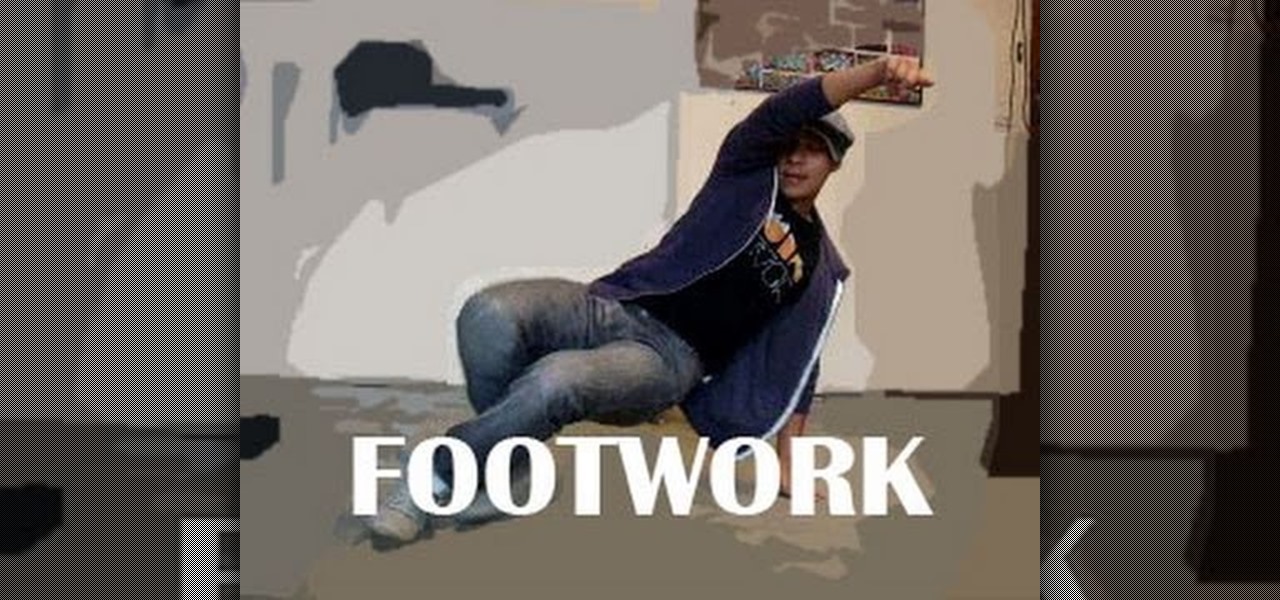
Footwork - Footwork consists of just that, working with the feet close the ground. Six step is one of the most basic and fundamental of all the variations of footwork. Potentially the styles are endless and footwork is a great transition into power moves. Here’s a tutorial on the Six Step to get started:         

Power - Power moves consist of the high energy fast acrobatic moves such as windmills, airfares and head spins. They can be some of the hardest to learn and can take years of practice. However they can be some of the most impressive and work well as a highlight of a set.      


Freeze - Freezes are the finishing moves of a set – the defining ending of the routine. These freezes vary widely from easy simple “baby freezes” to well practised inverts, hollow backs or one arm freezes.


A full Bboy set will usually consist of a variation of these different categories as well as a special attention and knowledge to the specific rhythms, build ups and drops of the music. When the set is performed with precision and recognition of the music, this is known as “killing the beat” and can be the overall deciding factor of wining a battle. Feeling and style are both also hugely important and one should try to incorporate there own individualism into there dance inventing and expressing themselves in the own unique way. I hope this helps to explain to those who wish to learn more about the art of Breakdance.